
 English
 العربية
 Nederlands
 Français
 Deutsch
 Italiano
 Português
 Русский
 Español
 Polski
 한국어
 Türkçe
 हिन्दी
 ไทย
 日本語
The twin screw compounding machine plays an important role in modern plastic modification, particularly in the continuous processing of multi-component formulations, reinforced compounds, and functional polymer materials.
This article provides a comprehensive overview of twin screw compounding machines, covering their structure, working principles, typical applications, key operating parameters, and selection methods to help you understand their technical features, processing capabilities, and practical applications.
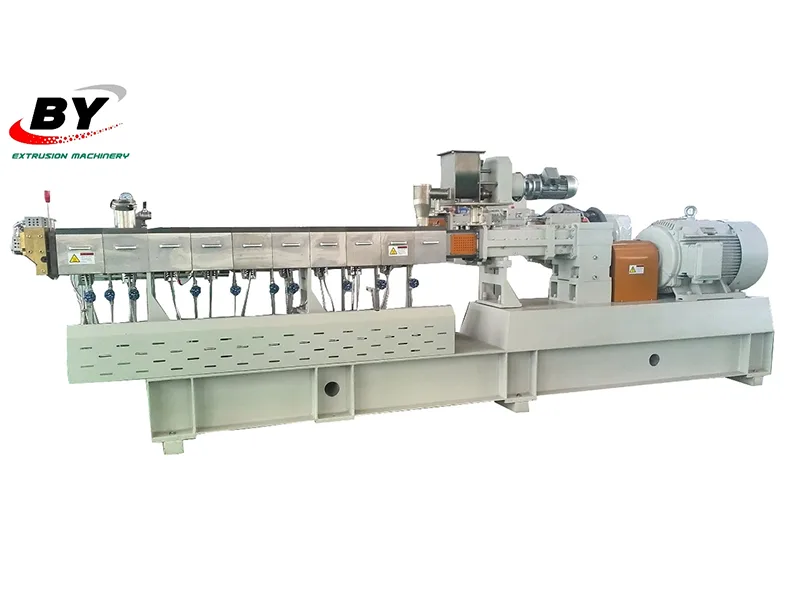
1. What Is a Twin Screw Compounding Machine?
A twin screw compounding machine is a processing system designed for the continuous mixing, plasticizing, and dispersion of materials. It is widely used in plastic compounding and modification to process polymers with additives, fillers, reinforcing materials, and other functional components.
Among different twin screw designs, the co-rotating intermeshing twin screw extruder is commonly used for polymer compounding. It features two screws that rotate in the same direction and intermesh within a common barrel. This configuration provides effective mixing and dispersion, along with flexible processing capabilities for different material formulations.
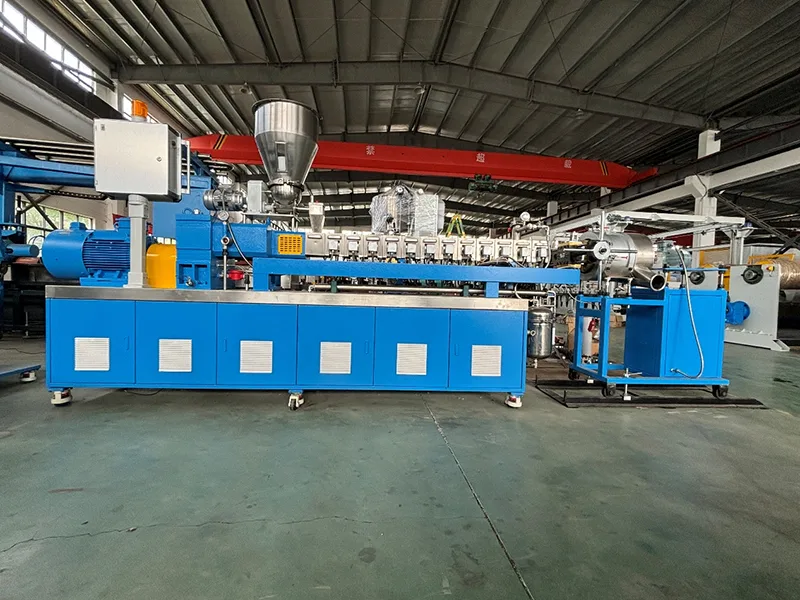
What Is Twin Screw Compounding? How Does It Differ from Conventional Extrusion?
Twin screw compounding is a continuous processing method that combines polymers with additives, fillers, reinforcing materials, or other polymers according to a specific formulation. Its primary purpose is to achieve uniform component distribution and effective dispersion, producing compounds with the desired material properties.
Compared with conventional extrusion, which primarily focuses on shaping materials into products such as pipes, sheets, and films, compounding extrusion places greater emphasis on material formulation and performance.
In simple terms:
- Conventional extrusion: Primarily focuses on shaping materials into the required products.
- Compounding extrusion: Focuses on combining different components to achieve specific material properties.
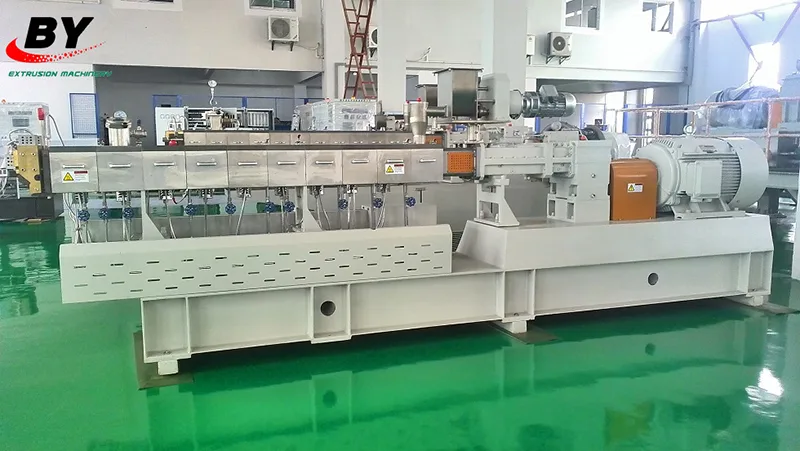
The two processes are not mutually exclusive and can also be integrated into the same production line.
In a typical compounding and pelletizing line, the compounded melt is cooled and pelletized to produce granules for subsequent molding processes. In direct extrusion or inline compounding applications, intermediate pelletizing can be omitted, allowing the material to be processed directly into finished or semi-finished products.
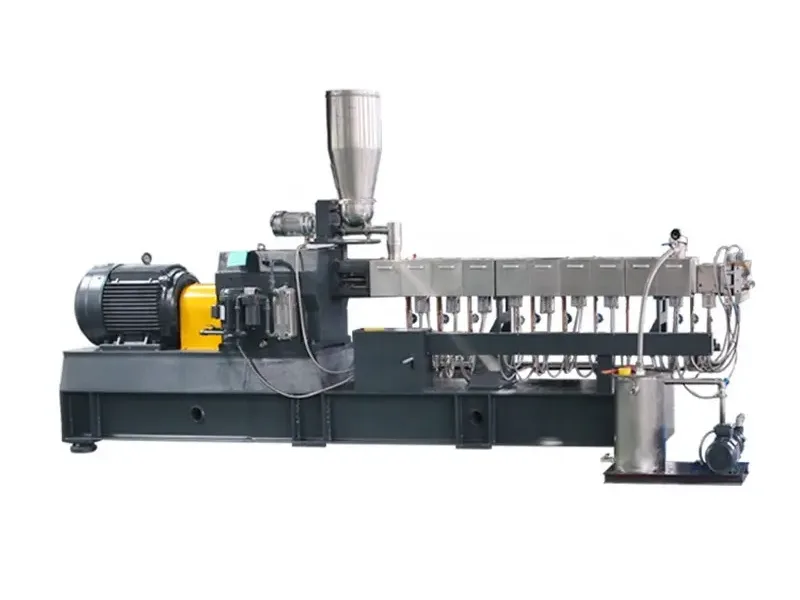
2. Main Components of a Twin Screw Compounding and Pelletizing Line
A typical twin screw compounding and pelletizing line consists of the following core equipment and auxiliary systems configured according to process requirements.
Components | Main Functions |
|---|---|
Main drive system: motor, coupling, and gearbox | Provides power to the two screws and performs power transmission, speed reduction, and torque distribution. |
Twin screws and modular screw elements | Perform conveying, plasticizing, mixing, dispersion, and pressure building. Different element configurations accommodate different processing requirements. |
Segmented barrel and heating and cooling systems | Provide the processing space, regulate temperatures in different zones, and incorporate feeding and venting ports. |
Solid material metering and feeding system | Controls the feeding rates of solid components such as resins, fillers, and additives according to the formulation. |
Side feeding system, optional | Introduces fillers, additives, or short-cut fibers into the main barrel from downstream positions, usually in combination with metering feeders. |
Liquid metering and injection system, optional | Meters and injects oils, liquid additives, catalysts, or other reactive components. |
Venting and vacuum devolatilization system, optional | Removes entrained air, moisture, and other volatile components that need to be eliminated. |
Melt filtration and screen-changing system, optional | Filters impurities from the melt and allows screen replacement. |
Melt pump, optional | Helps establish the melt pressure required for downstream filtration or pelletizing. |
Die head and die opening | Guides the melt out of the extruder to form strands or supply the corresponding pelletizing system. |
Cooling, pelletizing, and drying systems | Convert the melt into pellets and provide cooling and surface moisture removal according to the pelletizing method. |
Electrical control, instrumentation, monitoring, and interlocking system | Coordinates equipment operation, monitors process parameters, and provides operational protection. |
3. How Does a Twin Screw Compounding Machine Work?
Taking a typical co-rotating intermeshing twin screw compounding and pelletizing line as an example, its working process mainly includes the following stages. The processing sections can be configured according to specific requirements, and not all production lines follow exactly the same arrangement.
Step 1. Raw Material Metering and Feeding
Resins, additives, fillers, and reinforcing materials are introduced according to the formulation through a metering and feeding system. A loss-in-weight feeder adjusts the feeding rate by monitoring changes in the weight of its weighing system. Raw materials can be premixed before feeding or introduced separately through the main feeding port or downstream side feeder, depending on the material and process requirements.
Step 2. Conveying and Plasticization
The screws convey the material downstream. Through heat transfer from the barrel, as well as friction, plastic deformation, and viscous dissipation, the resin gradually plasticizes and melts. The heating and cooling systems work together to regulate processing temperatures and prevent overheating.
Step 3. Mixing, Dispersion, and Homogenization
Conveying elements, kneading blocks, and mixing elements work together to control material flow. Distributive mixing helps achieve more uniform component distribution, while dispersive mixing breaks down agglomerates and refines dispersed phases to produce a compound that meets the required performance specifications.
Step 4. Venting and Devolatilization
Atmospheric venting ports and vacuum devolatilization zones can be installed as required to remove entrained air, moisture, and volatile substances carried by the raw materials or generated during processing.
Step 5. Pressure Building, Extrusion, and Pelletizing
After compounding, the melt is pressurized and discharged through the die opening before entering the corresponding cooling and pelletizing systems. A common water-cooled strand pelletizing process involves "strand extrusion → water bath cooling → air-knife drying → pelletizing." Underwater pelletizing can also be used depending on material characteristics and production capacity requirements.
4. Why Are Twin Screw Compounding Machines Widely Used in Polymer Modification?
Twin screw compounding machines, particularly co-rotating intermeshing twin screw extruders, are widely used in polymer modification mainly because of the following advantages:
Efficient and Adjustable Mixing and Dispersion Capabilities: The combination of conveying, kneading, and mixing elements helps achieve both uniform component distribution and the dispersion of agglomerates. For specific material systems and processing conditions, mixing performance can be improved by adjusting the screw element configuration. For example, mixing elements that generate extensional flow can be introduced when processing nanofillers such as carbon nanotubes to improve filler dispersion.
Modular Design and Process Adaptability: The barrel and screws can be configured according to formulation and processing requirements. Different sections for conveying, plasticizing, mixing, devolatilization, and pressure building can be arranged, while processing conditions can be adjusted through feeding rate, screw speed, and temperature control.

Multifunctional Continuous Processing: Plasticizing, blending, filling, reactive processing, and devolatilization can be integrated into a single continuous process. The production line can also be connected to pelletizing or other downstream processing equipment according to the required configuration.
Self-Wiping and Reduced Material Retention: Co-rotating intermeshing screws have self-wiping characteristics that help reduce material retention and facilitate material and color changes.
5. Types of Twin Screw Configurations
Twin screws can be classified according to their rotation direction as co-rotating or counter-rotating. They can also be classified according to their geometric engagement as intermeshing or non-intermeshing. These two classification dimensions are independent of each other.
Co-Rotating: The two screws rotate in the same direction. Co-rotating intermeshing designs are widely used in polymer compounding and pelletizing. Different screw elements can be combined to perform conveying, plasticizing, distributive mixing, and dispersive mixing.
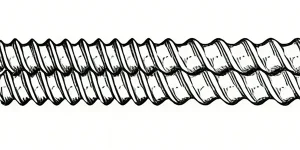
Counter-Rotating: The two screws rotate in opposite directions. Low-speed counter-rotating intermeshing designs are commonly used for processing heat-sensitive PVC formulations in pipe and profile extrusion. Other counter-rotating configurations can also be used for mixing, devolatilization, and reactive extrusion.
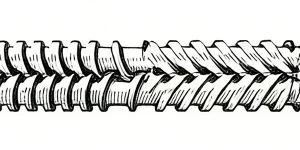
Intermeshing and Non-Intermeshing: The distinction depends on whether the flight of one screw extends into the channel region of the other screw. Their mixing, conveying, and self-wiping characteristics also depend on the specific structural design.


6. Common Screw Elements
For co-rotating intermeshing modular twin screw extruders, common screw elements include:
Conveying Elements: Primarily used to transport solid materials and melts in the axial direction. Depending on their geometric design, they can also contribute to pressure building.
Kneading Blocks: Consist of kneading discs arranged at specific stagger angles. They are mainly used for plasticization, distributive mixing, and dispersive mixing.
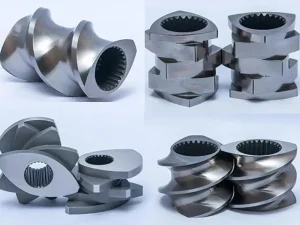
Mixing Elements: Use structures such as toothed profiles, grooves, or specialized flow channels to promote material splitting, recombination, and other mixing actions, improving component distribution or dispersion.
Reverse Elements: Create local resistance to forward material flow, increasing the degree of filling and pressure in the upstream section. They are used to adjust residence time, enhance mixing, or form a melt seal. Their associated shear and temperature rise need to be controlled.
7. Barrel Design
Segmented Barrel: Different barrel sections with various interfaces and structural designs are combined with the screw element configuration to create functional zones for conveying, plasticizing, mixing, devolatilization, and pressure building, accommodating different compounding processes.

Functional Port Configuration: Main feeding ports, side feeding ports, liquid injection ports, atmospheric venting ports, and vacuum devolatilization ports are arranged according to feeding sequence, mixing requirements, and devolatilization needs. Their positions must match the screw configuration and the processing state of the material.
Heating and Cooling Systems: Different temperature control zones can usually be adjusted independently. Common configurations use electric heating and water cooling, while other temperature control media or methods can be adopted for specialized processes.
Wear-Resistant and Corrosion-Resistant Design: Suitable barrel materials, replaceable liners, or internal surface coatings are selected according to filler abrasiveness, formulation corrosiveness, and processing loads in different sections. Additional protection can be provided in high-load areas such as melting, filler mixing, and pressure-building sections.
8. Applicable Materials and Typical Compounding Applications
Twin screw compounding is widely used in polymer blending, modification, and functionalization. Typical applications include:
Application Area | Typical Content |
|---|---|
Color Masterbatch and Functional Masterbatch | Distributive and dispersive mixing of pigments, carbon black, and functional additives for producing masterbatches used in coloring, flame retardancy, and other applications. |
Filled and Reinforced Plastics | Compounding of glass fiber-reinforced plastics, mineral-filled plastics, and wood-plastic composites (WPC). |
Polymer Blends and Alloys | Systems such as PC/ABS and PC/PBT, as well as PP/PS and PA/PPS systems with appropriate compatibilization or phase structure control. |
Engineering Plastic Modification | Reinforcement, toughening, filling, and functionalization of PA, PC, PBT, PPS, and other materials to achieve specific mechanical, thermal, flame-retardant, or electrical properties. |
Functional Polymer Composites | Polymer composites containing functional fillers such as carbon nanotubes (CNTs), with screw element configurations adjusted to improve filler dispersion and material functionality. |
Reactive Extrusion and Compatibilization | Chain extension, grafting, reactive compatibilization, dynamic vulcanization, and polymerization reactions in specific systems, such as TPU synthesis through reactive extrusion and polyamide chain extension modification. |
Recycled Plastic Compounding | Recompounding of post-consumer recycled plastics (PCR) and other recycled materials, combined with appropriate stabilization, chain extension, and compatibilization measures to improve processing performance or compensate for partial property losses. |
Bio-Based and Biodegradable Polymers | Processing of PLA, PHBH, PBAT, PBS, and other materials, including their blends and filled formulations. |
9. Key Equipment Specifications and Operating Parameters of Twin Screw Compounding
Parameter | Main Significance and Selection Considerations |
|---|---|
Screw Diameter and Geometry | Affect the available processing volume and production capacity potential. They should be evaluated together with channel depth, outer-to-inner diameter ratio, screw speed, torque, and feeding capacity. |
Effective Processing Length-to-Diameter Ratio (L/D) | Determines the available space for conveying, plasticizing, feeding, mixing, reaction, and devolatilization sections. It should be selected according to process requirements rather than simply maximizing the length. |
Screw Element Configuration | Determines the conveying, mixing, flow restriction, and pressure-building characteristics of each processing section and is an important process design variable. |
Screw Speed | Affects shear rate, mechanical energy input, and temperature rise. It needs to be adjusted in coordination with feeding rate and screw element configuration. |
Feeding Rates of Individual Components | Control formulation ratios and processing throughput while affecting equipment load and material processing conditions. |
Barrel Temperature and Melt Temperature | Barrel temperature settings in different zones regulate heat exchange. Actual melt temperature should be monitored in combination with mechanical heat generation and cooling conditions. |
Available Power, Torque, and Specific Torque | Define the mechanical load capacity of the equipment and affect throughput and operational stability under high-viscosity and high-filler-content conditions. |
These parameters need to be evaluated together rather than determined independently. In particular, equipment capacity and compounding performance should not be inferred solely from screw diameter, L/D ratio, or maximum screw speed.
10. Single Screw vs. Twin Screw Extruders for Plastic Compounding
The following comparison focuses on commonly used co-rotating intermeshing twin screw compounding extruders and conventional single screw extruders. Specially designed equipment may have different characteristics.

Comparison Aspect | Co-Rotating Intermeshing Twin Screw Extruder | Conventional Single Screw Extruder |
|---|---|---|
Mixing Capability | More suitable for complex formulations, multi-component mixing, and filled and reinforced compounds. | More suitable for plasticizing and extruding pre-compounded materials, although mixing sections can also provide certain mixing functions. |
Feeding and Multiple Feeding Points | Easier to configure with independent metering, side feeding, and staged feeding. | Multiple feeding configurations are generally more limited. Auxiliary feeding devices can be used for difficult-to-feed materials. |
Pigment and Filler Dispersion | Generally offers advantages through adjustable mixing actions achieved by different element configurations. | Depends on the mixing section, screw configuration, and processing conditions. |
Venting and Devolatilization | Easier to configure with multiple venting sections and vacuum devolatilization zones. | Venting designs are available, but conventional configurations generally offer less process flexibility. |
Mechanical and Maintenance Complexity | Higher, involving a dual-shaft drive system and a greater number of modular processing elements. | Generally lower, with relatively simpler drive and processing structures. |
Initial Investment and Operating Requirements | Generally higher, with greater requirements for process configuration and operational management. | Generally lower, making it suitable for many established continuous forming applications. |
These differences mainly reflect the different processing priorities of the two types of equipment.
Twin screw extruders focus more on adjustable continuous compounding. Their process flexibility and quality control advantages can provide economic benefits in applications involving complex formulations, filled and reinforced compounds, and high dispersion requirements. Single screw extruders focus more on plasticization, conveying, and forming. For conventional extrusion of pre-compounded materials, single screw extruders are often a simpler and more economical choice.
11. How to Choose a Twin Screw Compounding Machine?
Selecting a twin screw compounding machine requires starting with the formulation, target product quality, and stable production capacity. The main extruder, feeding system, devolatilization system, and downstream configuration should be determined accordingly and verified through trials using representative formulations.
Step 1: Define the Materials, Formulation, and Target Product Requirements
Consider filler and reinforcing material ratios, processing objectives, target quality specifications, and stable production capacity.
Step 2: Determine the Main Extruder and Screw Configuration
Consider equipment size, screw diameter, L/D ratio, speed range, torque, power, and screw element configuration.
Step 3: Design the Feeding and Devolatilization Systems
Include solid material metering, side feeding, liquid injection, atmospheric venting, vacuum devolatilization, and any necessary specialized structures.
Step 4: Configure the Downstream and Control Systems
Include filtration, melt pumps, cooling, pelletizing, drying, screening, conveying, and integrated production line control as required.
Step 5: Determine Wear-Resistant and Corrosion-Resistant Solutions
Select materials, liners, and protective measures according to material characteristics and the processing loads in different sections.
Step 6: Complete Material Trials and Agree on Acceptance Criteria
Verify product quality and operational stability at the target production capacity before finalizing the equipment configuration and acceptance criteria.
About Beyou
Nanjing Beyou Extrusion Machinery Co., Ltd. specializes in the development and manufacturing of polymer processing equipment and customized extrusion solutions.
Its main products include:
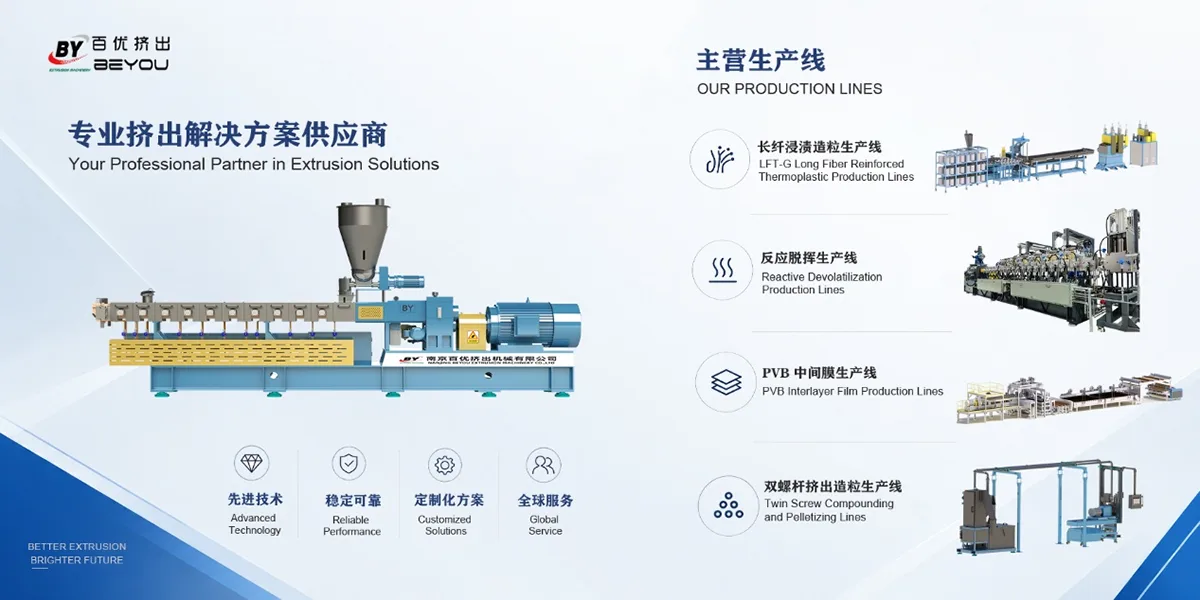
Beyou also provides customized solutions based on material formulations and processing requirements, including screw configurations, barrel designs, feeding systems, and downstream equipment for polymer compounding, modification, and recycling.
Contact Beyou to discuss your project requirements and find a suitable extrusion solution for your production needs.


